Chuck Jaffe, Mature Money—and The Morality of Money
Chuck Jaffe has spent decades talking about money, markets and what he calls “mature money”—the bigger-picture issues that go far beyond the latest investment or financial headline. When he read The Morality of Money, he said, “We can have fun with this.”
Yes, he said, “FUN” with morality and money.
Who is Chuck Jaffe?
Chuck Jaffe has spent decades covering investing and personal finance as a financial journalist. His career includes The Boston Globe and MarketWatch, where his nationally syndicated work reached investors across the country. He is also the author of three personal-finance books.
Today, he hosts the daily podcast, Money Life with Chuck Jaffe, where he talks with economists, investment professionals, authors and others examining money, markets and the financial decisions people make every day.
In other words, Chuck has seen a lot of financial books. I am a new author, and he wasn’t going to put me on his show simply because I sent him a pitch. But he was intrigued enough to read The Morality of Money.
Faith and spiritual principles run throughout the book, and Chuck normally wouldn’t consider what he viewed as a religious book for the show. But The Morality of Money isn’t a religious book dressed up as personal finance. It is a financial and economic book that refuses to contend that our beliefs, values and humanity should disappear when money enters the conversation.
“I got through the book yesterday and I think we can have some fun with this, so let’s set up a Book Interview segment.” — Chuck Jaffe
“FUN” with mature, moral money? I knew this was going to be good and it was.
Moral money is mature money.
The Conversation I Had Hoped We Would Have
Talking with Chuck wasn’t simply the opportunity to promote The Morality of Money. It’s exhilarating to talk with someone who understands economics and personal finance well enough to dig into the bigger premise of the book: money decisions don’t happen in isolation.
The book moves between the individual and the larger systems around us—between what we can control and what we cannot, between economic consequences and moral choices, and between financial knowledge and the life we ultimately create with it. That is where Chuck took the interview too.
What Chuck and I Actually Talked About
This was not a conversation about five tips for saving more money. We moved into some of the subjects that make The Morality of Money different—and that make money far more interesting than a spreadsheet.
Money Is Full of Trade-Offs
One of the central ideas behind The Morality of Money is that most meaningful financial decisions involve trade-offs.
The mathematically optimal decision isn’t automatically the right decision for every person because the purpose of money isn’t to win a spreadsheet competition. Money is a tool we use to create security, opportunity and, ultimately, the life we want to live.
Our values help us decide what to build with them.
The Destination of Moral Money: Money Life with Chuck Jaffe
Chuck Jaffe didn’t reduce the book to one category, and our conversation reflected the impactful diversity of The Morality of Money. We moved from faith to government policy, from individual choice to universal health care, from wealth disparity to taxation, and finally to seeking a Universal Wisdom and leaving a lasting legacy.
Those connections are not side trips from the subject of money. They are mature. They are moral, and that’s the destination.
Listen to My Conversation with Chuck Jaffe
This is the complete, unedited Book Interview from the September 23 episode of Money Life with Chuck Jaffe.
Prefer the complete episode? Listen to the full September 23 episode here.
VISIT MONEY LIFE WITH CHUCK JAFFE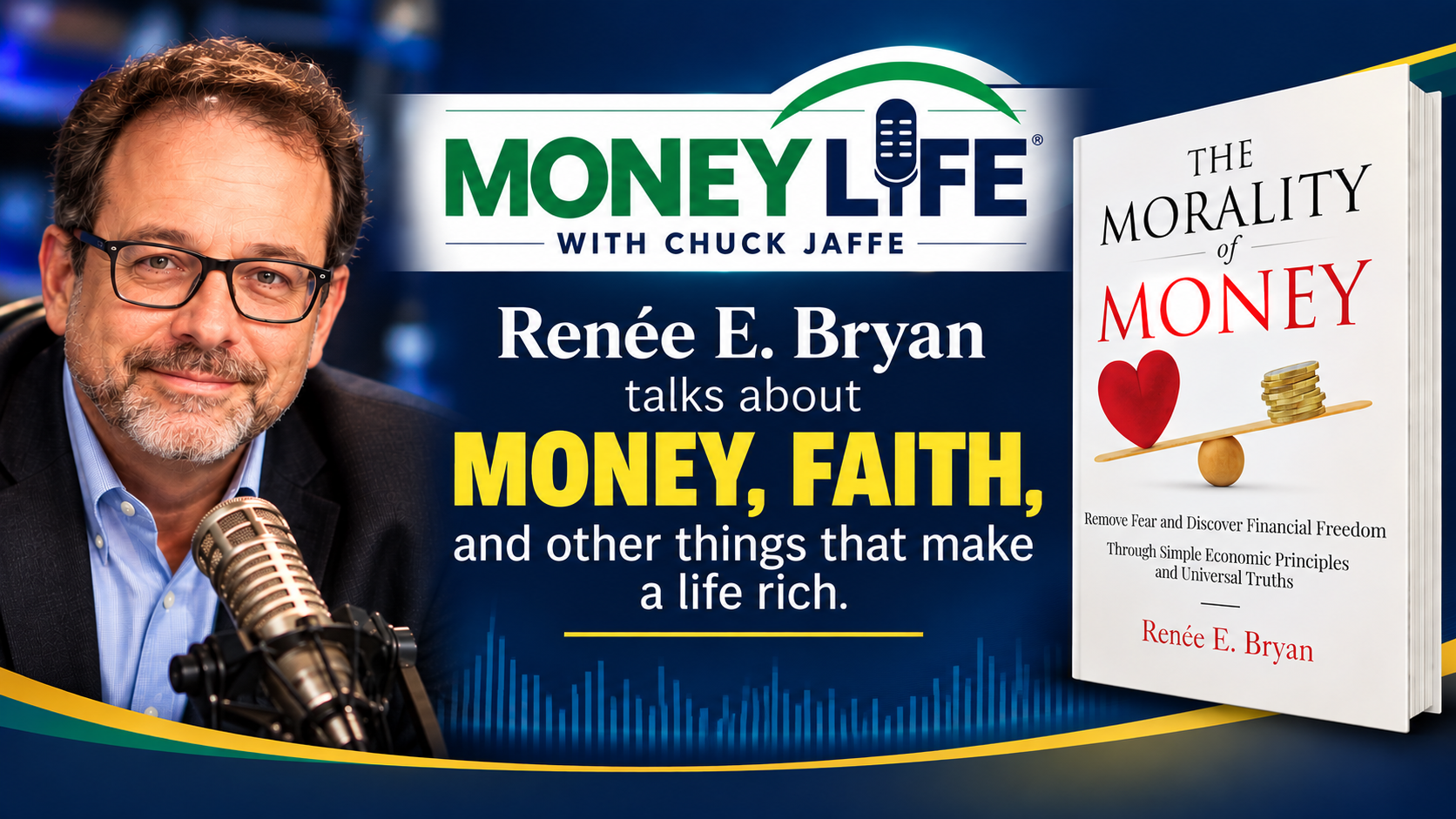

No responses yet